The Shields of Sudoku
(Published yesterday, 06:55 by Vythic)
Play on SudokuPad!
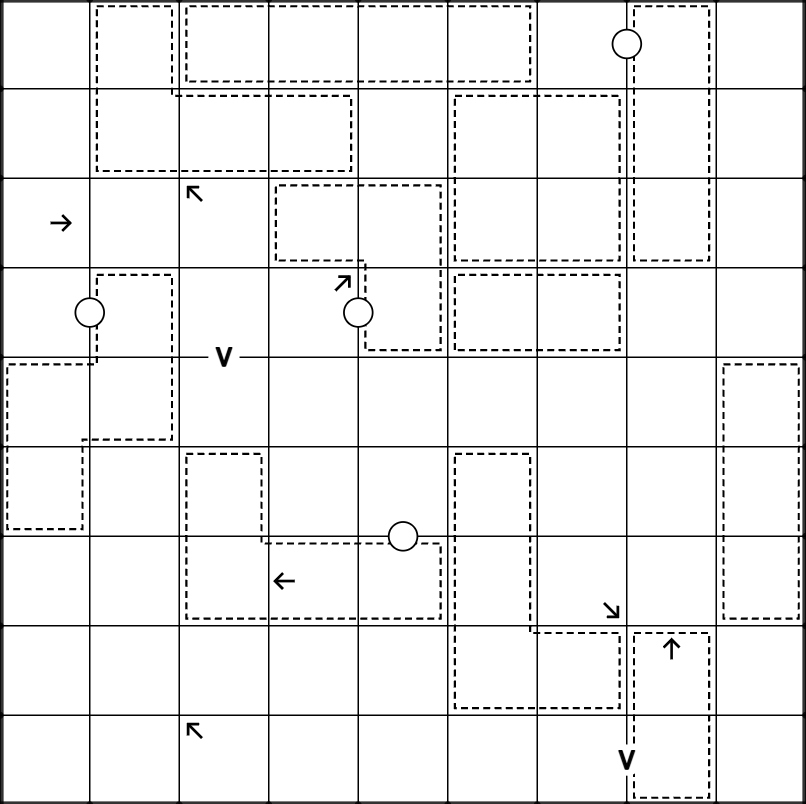
Digits are not repeated in any row, column, or region. The grid is divided into nine regions, each consisting of nine orthogonally connected cells containing the digits 1-9.
A cell is shielded if four of its orthogonal neighbors have the same parity as its digit.
Each arrow targets the first shielded cell in the direction it points, and must have a target. The arrow's digit must differ from the target's digit.
If the target's digit is greater than the arrow's digit, the difference between the target and arrow indicates the number of consecutive cells that belong to the same region as the target, starting with the cell immediately beyond the target and nearest to the arrow cell, in the direction toward the arrow, potentially beyond the arrow.
If the target's digit is less than the arrow's digit, mark a number of cells orthogonally adjacent to the target equal to the difference between the two digits.
Each marked cell's digit indicates the number of consecutive cells that belong to the same region as the marked cell, starting with an orthogonally adjacent cell to the marked cell, furthest from the shielded cell that caused it to be marked, and in the direction away from the marked cell.
Digits in a cage belong to the same parity and region.
Digits separated by a white dot have a difference of 1.
Digits separated by a V sum to 5.
You may refer to this visual example:
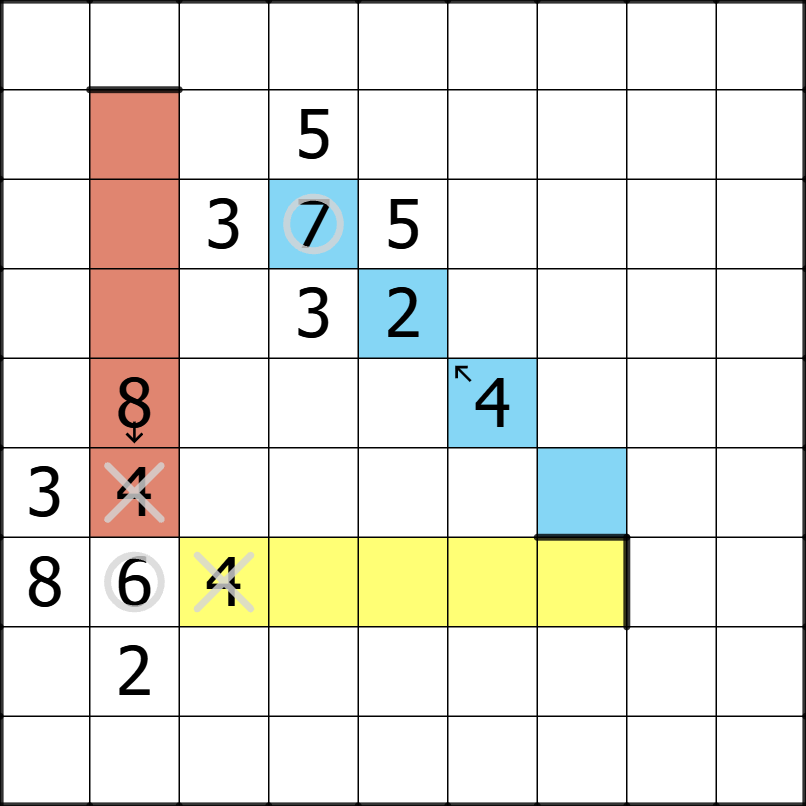
In the above example, the given digits force the different regions (of different colors) and the black borders mean they cannot join with the adjacent cell.
The circled "6" is the target of the "8" arrow cell, and by being lower with a difference of 2: two of its adjacent cells become marked (with an X). A marked cell then sees cells belonging to its region in the direction away from the target, equal to its digit. The targeted cell may or may not be apart of a marked cell's region.
The circled "7" is the target of the "4" arrow cell, and by being larger with a difference of 3: the target itself sees cells belonging to its region in the direction back toward the arrow cell, where the number of cells seen is the difference between the target and arrow cell.
Digits are not repeated in any row, column, or region. The grid is divided into nine regions, each consisting of nine orthogonally connected cells containing the digits 1-9.
A cell is shielded if four of its orthogonal neighbors have the same parity as its digit.
Each arrow targets the first shielded cell in the direction it points, and must have a target. The arrow's digit must differ from the target's digit.
If the target's digit is greater than the arrow's digit, the difference between the target and arrow indicates the number of consecutive cells that belong to the same region as the target, starting with the cell immediately beyond the target and nearest to the arrow cell, in the direction toward the arrow, potentially beyond the arrow.
If the target's digit is less than the arrow's digit, mark a number of cells orthogonally adjacent to the target equal to the difference between the two digits.
Each marked cell's digit indicates the number of consecutive cells that belong to the same region as the marked cell, starting with an orthogonally adjacent cell to the marked cell, furthest from the shielded cell that caused it to be marked, and in the direction away from the marked cell.
Digits in a cage belong to the same parity and region.
Digits separated by a white dot have a difference of 1.
Digits separated by a V sum to 5.
You may refer to this visual example:
In the above example, the given digits force the different regions (of different colors) and the black borders mean they cannot join with the adjacent cell.
The circled "6" is the target of the "8" arrow cell, and by being lower with a difference of 2: two of its adjacent cells become marked (with an X). A marked cell then sees cells belonging to its region in the direction away from the target, equal to its digit. The targeted cell may or may not be apart of a marked cell's region.
The circled "7" is the target of the "4" arrow cell, and by being larger with a difference of 3: the target itself sees cells belonging to its region in the direction back toward the arrow cell, where the number of cells seen is the difference between the target and arrow cell.
Solution code: Column 3, top to bottom, with a "/" between digits of different regions.
Last changed on yesterday, 21:41
Solved by han233ing, ChigBeese, MattYDdraig, PierreTombal, sehringdipity
Comments
yesterday, 15:08 by MattYDdraig
The rules can be tricky to parse, but it's worthwhile taking the time because the puzzle is very clever and a lot of fun.


